Global buyers entering 2026 face a piping market shaped by energy transition, water stress, and stricter asset-performance expectations. The International Energy Agency’s World Energy Investment 2024 report estimated global energy investment would exceed $3 trillion. Clean-energy investment represented roughly two-thirds of that total. Every new facility still needs reliable Piping Systems, from hydrogen skids to cooling-water networks.
Water projects add another pressure point. The United Nations World Water Development Report 2024 states that agriculture accounts for approximately 70% of global freshwater withdrawals. This figure makes leakage control, corrosion resistance, and accurate flow measurement commercially important. It also changes purchasing decisions. A cheaper pipe can become expensive when maintenance teams face repeated shutdowns.
George A. Antaki, author of Piping and Pipeline Engineering, describes piping as “the circulatory system of a plant.” That comparison remains useful. If circulation fails, production, safety, and revenue can suffer together. In 2026, buyers should compare materials, pressure classes, joining methods, inspection records, and lifecycle costs—not only catalog prices. ASME B31.3, ISO 15649, and EN 13480 can support more disciplined technical reviews. Regional approvals still require careful verification.
The perfect system does not exist.
This guide examines corrosion-resistant alloys, thermoplastics, composite pipes, prefabricated modules, and smart monitoring options. It considers demanding environments, including salt air, abrasive slurry, extreme temperatures, and limited maintenance access. Some forecasts may overstate technology adoption. That uncertainty deserves attention. A practical Piping Systems strategy balances verified performance, supplier experience, documentation quality, and future repairability.
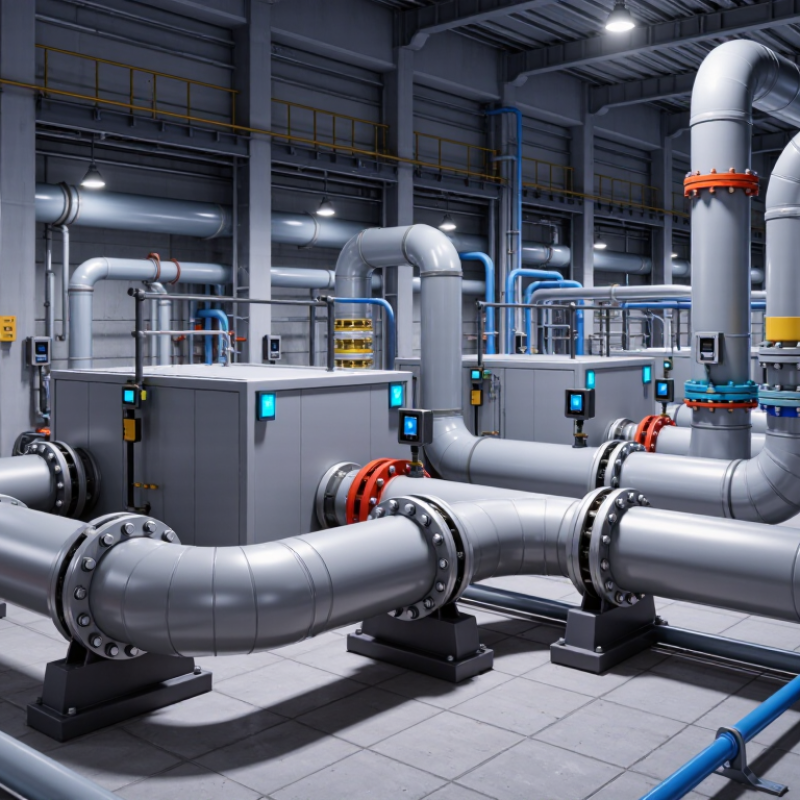
For global buyers, choosing a piping system starts with the medium, temperature, pressure, and installation environment. A system that handles clean water may fail with solvents, abrasive slurry, or heated oil. Metal piping, including carbon steel, stainless steel, and ductile iron, suits high-strength duties and demanding pressure cycles. It also requires corrosion control, qualified welding, and regular inspection. That maintenance burden matters.
Plastic systems, such as PVC, CPVC, HDPE, and PP, offer low weight and resistance to many chemicals. They are common in water treatment, irrigation, drainage, and process lines with moderate temperatures. HDPE bends around uneven ground and tolerates some movement, while rigid plastics need careful support near valves. Composite piping can reduce weight in corrosive environments, but buyers should verify fire performance and joining methods. Small details decide reliability.
For steam, compressed air, fuel transfer, and high-pressure process service, engineers often specify welded or flanged metal networks. Sanitary facilities need smooth internal surfaces and cleanable connections. Double-containment piping adds protection where leaks could harm workers or soil. Before ordering, compare pressure ratings, thermal expansion, local codes, test certificates, spare parts, and installer skills. A lower purchase price can hide higher lifecycle costs. Project reviews often reveal excessive focus on material price and insufficient planning for supports, testing, and future access.
Material selection should begin with the fluid, temperature, pressure, and installation environment. Carbon steel suits many utility lines, while stainless steel supports cleaner or corrosive services. Plastic systems can reduce weight and resist selected chemicals, but temperature limits require careful review. Duplex alloys may perform well in chloride-rich environments, although welding control becomes more demanding. A cheaper material can create expensive maintenance later.
Standards must fit the project location and service risk. Buyers commonly compare ASME, ASTM, ISO, EN, and API requirements, but these documents are not automatically interchangeable. Confirm the current edition, allowable stress values, dimensions, and testing rules. Ask for heat numbers, material certificates, welding records, and pressure-test results. Traceability matters. Without it, a polished certificate may prove little.
Performance requirements should be written in measurable terms. Specify design pressure, operating temperature, flow rate, corrosion allowance, insulation needs, and expected service life. Check flange ratings, gasket compatibility, joint methods, and thermal expansion. Field conditions also matter; muddy sites, limited lifting equipment, and uneven supports can change installation performance. A system may pass factory testing yet fail through poor alignment or inadequate drainage. That risk is often underestimated. Reviewers should challenge vague phrases such as “industrial grade” and request evidence for every critical claim. Even a strong specification can contain assumptions worth revisiting.
2026 Best Piping Systems for Global Buyers?
How to Evaluate Suppliers, Manufacturing Quality, and Certifications
A reliable piping supplier should provide traceable production records, not only attractive quotations. Ask for the factory address, ownership details, production capacity, and recent project references. A short video call can reveal whether equipment looks active or staged.
Request material certificates showing the heat number, chemical composition, mechanical properties, and applicable standard. Check that the heat number matches the pipe markings and packing list. Inspect wall thickness, outside diameter, surface condition, bevels, and coating coverage. For pressure applications, review hydrostatic or non-destructive testing reports. Details matter.
A qualified third-party inspector can witness sampling, dimensional checks, and final packing. This reduces dependence on supplier-controlled reports. Certifications such as ISO 9001 may indicate a documented quality system, but they do not guarantee every shipment. Confirm certificate scope, validity, issuing body, and product coverage. Import requirements may also demand regional conformity documents.
Be careful with perfect claims. A clean factory visit can miss inconsistent batches. One approved sample cannot prove long-term stability. I would compare at least three production lots and retain independent test samples. It costs more initially. Defects cost more later.
Clear contracts should define tolerances, inspection rights, packaging, marking, delivery terms, and remedies for nonconforming goods. Keep communication written. Technical drawings should carry revision numbers, because small changes can create expensive installation problems.
| Evaluation Category | Evaluation Dimension | What a Qualified Supplier Should Demonstrate | Relevant Standard or Reference | Documents and Evidence to Request | Suggested Weight | Buyer Verification Method |
|---|---|---|---|---|---|---|
| Supplier Qualification | Quality management system | A documented quality management system covering design control, purchasing, production, inspection, nonconformity handling, and corrective action. | ISO 9001:2015 | Valid certificate, certification scope, issuing certification body, audit status, and quality manual index. | 12% | Verify the certificate number and scope with the issuing certification body; confirm that the product and manufacturing site are covered. |
| Manufacturing Quality | Raw-material traceability | Each production lot can be linked to incoming material records, batch numbers, production dates, operators, and final inspection results. | ISO 9001 traceability principles; applicable product standard | Material certificates, batch records, heat numbers where applicable, resin or compound data, and lot identification procedure. | 10% | Select a finished lot and trace it backward from the product marking to the raw material and inspection records. |
| Manufacturing Quality | Dimensional and visual consistency | Controlled outside diameter, wall thickness, length, ovality, surface condition, end preparation, and marking according to the selected product standard. | Applicable standard, such as ISO 4427 for polyethylene water pipes, ISO 1452 for PVC-U water systems, or ISO 2531 for ductile iron pipes | Inspection plan, calibrated measuring equipment list, dimensional inspection reports, and product marking specification. | 10% | Review calibration records and perform independent dimensional checks on randomly selected samples. |
| Performance | Pressure and load performance | The pipe, fittings, joints, and valves are rated for the specified operating pressure, temperature, fluid, burial or support conditions, and design life. | ISO 9080 for thermoplastic pipe long-term strength evaluation; ISO 1167 for thermoplastic pipe internal pressure testing; applicable design code | Pressure class or SDR/PN data, design calculations, pressure-test reports, joint test results, and stated service-temperature limits. | 14% | Compare the supplier’s ratings with the project design pressure, surge allowance, temperature, chemical exposure, and installation method. |
| Testing Capability | Routine and type testing | The factory performs or controls relevant tests for hydrostatic pressure, tensile or impact performance, leakage, dimensions, coating, lining, and joint integrity. | Product-specific ISO, EN, ASTM, or national standards stated in the purchase specification | Test procedures, acceptance criteria, recent test reports, equipment list, calibration certificates, and laboratory competency information. | 12% | Confirm that test methods, sample identification, test conditions, and acceptance criteria match the contract and applicable standard. |
| Certifications | Third-party product certification | Product certification is issued for the exact material, pressure class, size range, intended application, and manufacturing location. | Applicable national or regional conformity scheme; certification requirements for potable-water contact where relevant | Certificate, scope, expiry date, surveillance status, certified product range, factory address, and applicable test reports. | 12% | Check certificate validity directly in the certifier’s public database or through written confirmation from the certifier. |
| Regulatory Compliance | Drinking-water and chemical-contact suitability | Materials in contact with drinking water comply with the legal and health requirements of the destination market, including extractables or migration limits where applicable. | NSF/ANSI/CAN 61 or the applicable destination-market drinking-water contact requirements | Current approval or conformity documentation, formulation information under confidentiality controls, test reports, and declaration of intended use. | 10% | Match the approval to the exact product, formulation, diameter range, temperature, fluid, and destination-country requirements. |
| Documentation | Material and inspection certificates | The supplier provides a complete quality dossier, including certificates of conformity, inspection results, packing records, and nonconformity disposition. | EN 10204:2004, where metallic product inspection documents are specified | Inspection certificate type, batch or heat number, chemical and mechanical results, dimensional report, and authorized release signature. | 8% | Require document submission before shipment and verify that all document identifiers match the delivered goods. |
| Sustainability | Environmental and occupational controls | The manufacturing site controls waste, emissions, energy use, hazardous substances, worker safety, and environmental incidents through documented processes. | ISO 14001:2015; ISO 45001:2018; destination-market environmental requirements | Valid certificates, environmental objectives, waste records, safety performance data, and restricted-substance declarations where applicable. | 6% | Review certificates and site records; confirm that environmental claims are supported by measurable data rather than marketing statements. |
| Delivery Reliability | Capacity, lead time, packaging, and export readiness | The supplier has documented production capacity, realistic lead times, export packaging, container-loading procedures, and controls for moisture, impact, and UV exposure during transport. | Incoterms® 2020 for delivery responsibilities; applicable packaging and transport requirements | Production schedule, capacity statement, packaging specification, loading plan, export documents, and historical on-time delivery data. | 6% | Conduct a pre-shipment inspection and compare the agreed delivery schedule with documented production progress. |
| Total Suggested Evaluation Weight | 100% | Use the weights as a starting point and adjust them to the project risk profile. | ||||
A low purchase price rarely represents the full cost. Buyers should compare material, coating, labor, inspection, insurance, and inland transport. Steel and polymer systems behave differently under heat, pressure, soil movement, and chemical exposure. Regional standards also matter. A pipe accepted in one market may require new testing elsewhere. The World Bank’s Logistics Performance Index 2023 shows major differences in customs efficiency and shipment reliability. These gaps can change delivery costs quickly. Shorter routes are not always safer. UNCTAD’s Review of Maritime Transport 2024 reported sharp vessel declines through the Suez Canal during recent disruptions. A delayed shipment can stop an entire construction site.
Sustainability now requires measurable evidence, not attractive claims. The IEA’s Global Methane Tracker 2024 estimated around 120 million tonnes of methane emissions from fossil fuel operations in 2023. Better joint design, leak testing, and digital monitoring can reduce losses. Recycled content may help, but only when durability and traceability remain strong. Regional climate conditions need equal attention. Coastal projects face salt exposure, while northern sites require freeze resistance. Some assumptions fail in the field. A cheaper lightweight system may need more supports, repairs, or replacement.
Tips: Request a landed-cost model, not only a factory quote. Check pressure ratings, certificates, local approvals, spare parts, and repair skills. Ask suppliers for verified carbon data and test records. Keep a realistic contingency for ports, weather, and currency changes. Brilliant spreadsheets still miss human delays.
Selecting the right piping system in 2026 starts with service conditions, not material trends. Define fluid type, pressure, temperature, flow rate, soil, and installation method. A pipe under a sunny roof faces different risks than one buried beside a coastal road.
The U.S. EPA’s 7th Drinking Water Infrastructure Needs Survey estimates $625 billion in drinking water investment through 2040. This figure shows why lifecycle cost matters. Compare purchase price, joining labor, corrosion control, inspection, energy use, and replacement access. The International Energy Agency’s World Energy Outlook 2024 also highlights rising electricity demand, making pressure loss an important operating cost. Small diameter errors can become expensive after thousands of pumping hours.
Tips: Build a written duty profile before requesting quotations. Ask suppliers for pressure ratings, temperature limits, test standards, and traceability records. Check compatibility with valves, pumps, seals, and existing pipework. A technically strong system can still fail during installation. I have seen projects overvalue material strength and undervalue joint training. That judgment deserves review. Select a qualified local installer, then verify welds, joints, supports, and flushing procedures. Do not accept certificates without checking batch numbers and test dates.
Source: U.S. EPA Drinking Water Infrastructure Needs Survey and Assessment, 2023; International Energy Agency, World Energy Outlook 2024.