
2026 Best Used Bulldozer Types for Global Buyers

Buying a Used Bulldozer in 2026 is no longer a simple search for the lowest auction price. Global buyers must compare machine type, operating hours, undercarriage condition, parts access, transport costs, and local emissions requirements.

Recent industry research supports this careful approach. Off-Highway Research continues to track strong demand for construction equipment across infrastructure, mining, and land development markets. Its regional analysis shows that machine preferences vary widely with project scale and terrain. Ritchie Bros.’ Used Equipment Market Trends reports also show that resale values depend heavily on brand reputation, maintenance records, age, and seasonal demand. EquipmentWatch data further emphasizes lifecycle cost, not purchase price alone, when evaluating used heavy equipment.

Crawler dozers remain the safest choice for difficult ground and large earthmoving projects. Their wide tracks provide traction on clay, gravel, and uneven slopes. Smaller dozers can reduce shipping costs and suit road maintenance, farms, and municipal work. Larger models deliver greater pushing capacity, but they consume more fuel and require more expensive transport. That trade-off is easy to underestimate.

The best Used Bulldozer is not always the newest model. A ten-year-old machine with documented servicing may outperform a neglected five-year-old unit. Buyers should inspect blade cylinders, final drives, track shoes, rollers, engine blow-by, and hydraulic leaks. A cold-start video helps, but it cannot replace an independent inspection.

No ranking is perfect. Market data can lag behind local conditions, and auction prices may exclude repairs, taxes, or port charges. This guide therefore compares leading used bulldozer types through practical field experience, manufacturer specifications, ownership risks, and regional buying realities.
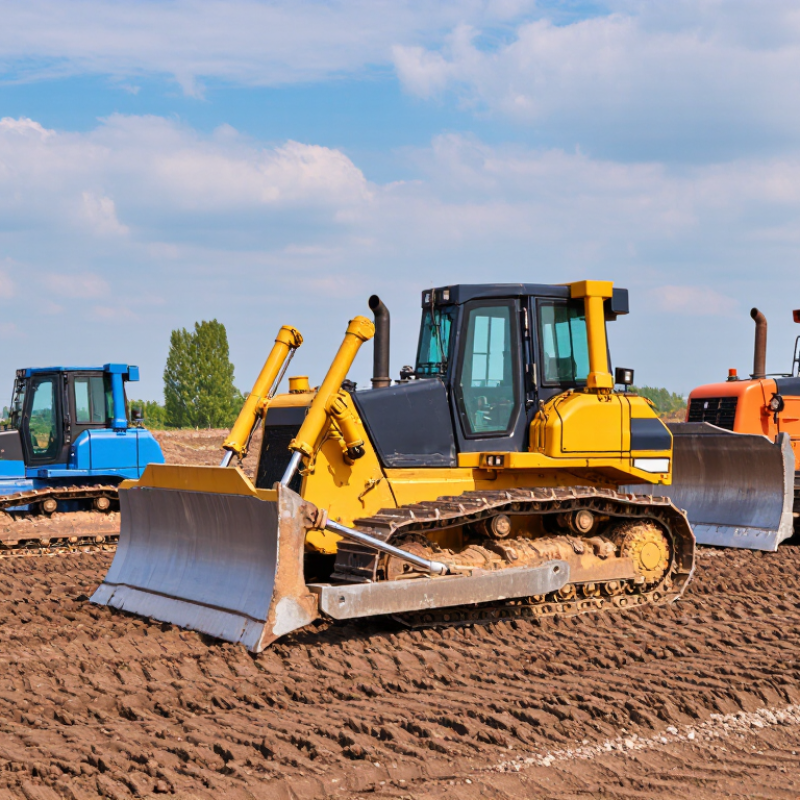
2026 Best Used Bulldozer Types for Global Buyers

What a Used Bulldozer Is and Why Global Buyers Choose One

2026 Best Used Bulldozer Types for Global Buyers

A used bulldozer is a heavy crawler or wheel tractor with a front-mounted blade. It pushes soil, gravel, debris, and construction waste across demanding sites. Crawler dozers offer strong traction on mud and uneven ground. Wheel dozers move faster on firm surfaces. The right type depends on terrain, transport limits, and local repair skills.

Global buyers often choose used machines because purchase costs are lower and availability is faster. Off-Highway Research estimated that about 1.1 million construction equipment units were sold worldwide in 2023. That large installed base supports a broad secondhand supply. EquipmentWatch’s 2024 Used Equipment Market Report also tracks machine age, operating hours, auction values, and retail prices. These indicators help buyers compare a real machine with optimistic seller claims.

Hours alone can mislead. A dozer with 7,000 hours may outperform one with 4,000 hours if maintenance records are complete. Inspect the blade cutting edge, final drives, hydraulic cylinders, undercarriage pins, and engine smoke. Check cold starting, steering response, oil leaks, and abnormal vibration. Small defects become expensive across borders. That assumption needs challenging. A lower price is not always better value, especially when parts are scarce locally. Experienced buyers request service records, serial-number consistency, inspection photographs, and an independent test report before payment.

Main Used Bulldozer Types and Their Typical Applications

Used bulldozers serve different work conditions, so buyers should match the machine to the ground. Crawler dozers provide strong traction on clay, gravel, and uneven construction sites. Their wide tracks spread weight and reduce sinking on soft surfaces. They commonly handle road building, quarry preparation, land clearing, and large earthmoving projects. I have found that track condition often matters more than appearance.

Wheel dozers move faster between work areas and suit firm, prepared ground. They are useful for stockpiling materials, maintaining industrial yards, and cleaning large sites. Their rubber tires can reduce surface damage, but they lose traction in deep mud. A compact dozer fits narrow urban projects, drainage work, and residential grading. It offers better visibility and simpler transport. Small machines still need careful blade control.

Low-ground-pressure dozers use wider tracks for wetlands, peat, and loose sand. They are valuable for pipeline corridors, environmental restoration, and marsh access roads. A ripper-equipped dozer can break hard layers before grading, especially where compacted soil slows production. However, attachments add weight, maintenance needs, and operating costs. Used equipment records may be incomplete. Buyers should inspect undercarriage wear, hydraulic leaks, blade cracks, and cold-start performance before purchase. A clean repaint can hide expensive repairs. That detail is easy to miss.

Key Specifications for Comparing Used Bulldozers

2026 Best Used Bulldozer Types for Global Buyers

Key Specifications for Comparing Used Bulldozers

Choosing a used bulldozer starts with the job, not the paint or listing price. Crawler bulldozers suit rough ground, slopes, and long pushing distances. Wheel bulldozers move faster on firm surfaces and work well across large sites. Compact models fit narrow roads, small farms, and restricted construction areas. Each type needs different performance measurements.

Compare operating weight, engine power, blade capacity, and ground pressure. A heavier machine usually delivers stronger traction, but transport costs can rise quickly. Blade width and tilt functions affect grading accuracy. Check the hydraulic flow rate when attachments will be used. Small details matter. An eight-hour workday exposes weak cooling systems and slow hydraulic response.

Service hours provide useful evidence, but they never tell the whole story. Inspect undercarriage wear, track links, rollers, sprockets, and blade edges in person. Uneven track wear may reveal poor alignment or hard working conditions. Examine oil leaks around hydraulic cylinders and final drives. Request cold-start videos and maintenance records from the seller. I once trusted a clean exterior and missed noisy rollers during inspection. That mistake changed my checklist.

For global buyers, verify transport dimensions, total weight, steering type, and available replacement parts. Engine emission requirements may differ between countries. Confirm the machine’s operating history and stored condition. A low-hour bulldozer can still have dry seals after years without use. Measure real fuel consumption when possible. Hour meters can be inaccurate. Independent inspection remains valuable.

2026 Best Used Bulldozer Types for Global Buyers - Key Specifications for Comparing Used Bulldozers

Typical specifications and comparison ranges for used crawler bulldozers. Actual performance depends on configuration, operating hours, maintenance history, attachments, climate, and working conditions.

Used Bulldozer Type Typical Operating Weight Typical Net Power Typical Blade Width Typical Blade Capacity Ground Pressure Transport Considerations Best Applications Used-Buyer Evaluation Priority
Small Crawler Bulldozer 6–12 t 55–105 hp
(41–78 kW)
2.4–3.0 m 1.5–3.0 m³ 35–55 kPa Usually suitable for regional road transport; confirm legal width and total shipping weight. Residential development, landscaping, farm roads, utility trenches, and light site preparation. Undercarriage wear, blade linkage play, cooling-system condition, and hydraulic leaks.
Medium Crawler Bulldozer 13–25 t 110–210 hp
(82–157 kW)
3.0–3.8 m 3.0–6.5 m³ 55–80 kPa Often requires a low-loader or heavy haulage trailer; check axle loads and route restrictions. General earthmoving, road construction, quarry support, land clearing, and large commercial sites. Track-chain and sprocket remaining life, transmission response, final drives, and frame cracks.
Large Crawler Bulldozer 26–45 t 220–390 hp
(164–291 kW)
3.8–4.6 m 6.5–12.0 m³ 75–105 kPa Requires specialized heavy transport, route planning, permits, and suitable loading equipment. Major infrastructure, mining support, bulk earthmoving, large-scale grading, and difficult cuts. Powertrain oil analysis, final-drive temperature, structural repairs, and hydraulic pump performance.
Extra-Large Mining Bulldozer 46–115 t 400–1,000 hp
(298–746 kW)
4.5–6.5 m 12.0–30.0 m³ 95–150 kPa Normally transported in major components using engineered heavy-haul logistics and site assembly. Open-pit mining, overburden management, large stockpiles, and continuous high-load dozing. Lifetime operating hours, rebuild records, structural fatigue, cooling capacity, and parts availability.
Low-Ground-Pressure Bulldozer 12–30 t 110–300 hp
(82–224 kW)
3.2–4.2 m 3.5–8.0 m³ 25–45 kPa Transport weight may be moderate, but extra-wide tracks can affect road permits and loading clearance. Peatland, wetlands, soft soil, reclamation work, pipeline corridors, and floodplain construction. Track width and shoe condition, undercarriage alignment, flotation performance, and blade control.
Swamp or Marsh Bulldozer 15–35 t 130–330 hp
(97–246 kW)
3.5–4.8 m 4.0–9.0 m³ 20–40 kPa Extra-wide configuration can require route surveys, special permits, and careful trailer selection. Wetland access, canal and levee work, land reclamation, drainage projects, and soft alluvial ground. Water and mud ingress, sealed-component condition, track-frame corrosion, and hydraulic contamination.
Waste-Handling Bulldozer 18–45 t 180–450 hp
(134–336 kW)
3.4–4.8 m 5.0–12.0 m³ 60–100 kPa Heavy transport is commonly required; inspect overall height when equipped with guarding and special attachments. Landfill cell construction, waste spreading, cover placement, transfer stations, and refuse compaction support. Radiator and air-intake plugging, cab and belly guarding, corrosion, seals, and fire-prevention systems.
Pipelaying or Side-Boom Configuration 20–50 t 180–500 hp
(134–373 kW)
3.2–4.6 m 4.5–11.0 m³ 55–95 kPa Attachment configuration can significantly affect width, height, center of gravity, and transport permits. Pipeline corridors, slope work, trench support, right-of-way preparation, and material backfilling. Attachment certification, rated lifting system, winch or side-boom condition, brakes, and structural integrity.
Angle-Blade Bulldozer 10–40 t 100–400 hp
(75–298 kW)
2.8–4.8 m 2.5–10.0 m³ 45–95 kPa Generally similar to the base machine, but blade articulation may affect transport width. Roadside shaping, ditching, side casting, slope trimming, snow removal, and confined earthmoving. Angle-cylinder leakage, pivot-pin wear, blade cutting-edge condition, and control-valve response.
Winch-Equipped Bulldozer 15–45 t 130–450 hp
(97–336 kW)
3.0–4.8 m 3.5–11.0 m³ 50–100 kPa Additional rear equipment increases transport length and may require attachment removal. Forestry, steep terrain, recovery work, utility corridors, anchoring, and controlled pulling operations. Winch drum and cable wear, clutch and brake operation, rear-frame stress, and hydraulic controls.

Note: Weight, power, blade dimensions, capacity, and ground pressure are representative ranges for comparison only. Before purchase, verify the machine identification plate, service records, hour-meter history, inspection results, regional emissions requirements, spare-parts support, and attachment compatibility.

How to Evaluate Condition, History, and Operating Costs

2026 Best Used Bulldozer Types for Global Buyers

How to Evaluate Condition, History, and Operating Costs

A used bulldozer should be judged by evidence, not paint or advertised hours. During inspections, I check the undercarriage before the engine. Worn tracks can consume a large repair budget quickly. Measure shoe height, link wear, roller condition, and sprocket tooth shape. Look for uneven wear. It often reveals poor adjustment or difficult ground conditions.

Request service invoices, ownership records, and previous work locations. A machine used in quarrying may suffer more stress than one used on clean soil. Compare the hour meter with pedal wear, seat damage, and hydraulic control looseness. Meters can be replaced. Records are imperfect, but missing records increase uncertainty. I once trusted a clean machine with low hours. Its cold start exposed weak compression and delayed oil pressure.

Test the bulldozer cold, not after the seller warms it. Watch exhaust color, starting time, hydraulic response, and blade drift. Inspect leaks beneath the machine after operation. Check transmission engagement on a slope, within safe site limits. Estimate fuel use, transport, routine filters, fluids, track repairs, and unexpected downtime. A cheaper purchase may become expensive after several months. Local parts access also matters, especially for remote projects. Leave room for mistakes. Even experienced buyers can miss internal wear without oil analysis or a professional inspection.

Global Buying, Inspection, Shipping, and Import Considerations

Global buyers should match the used bulldozer type with terrain, workload, and transport limits. A crawler dozer suits muddy construction sites, road work, and uneven ground. A smaller unit can reduce shipping costs and simplify inland delivery. Before purchase, request the serial number, operating hours, maintenance records, and recent hydraulic test results. Records are useful, but they are not proof.

Inspect the machine in daylight. Check the undercarriage, blade cutting edge, track tension, final drives, hydraulic cylinders, and engine smoke. Oil leaks around seals may indicate expensive repairs. Start the engine cold, not after the seller has warmed it. Listen for unusual knocking and observe pressure readings. A clean repaint can mislead. I have seen attractive machines hide worn pins and cracked welds. An independent inspector is worth the extra cost, although inspection reports can still miss intermittent faults.

Tips: Confirm the destination country’s age, emissions, safety, and import requirements before paying. Ask for clear photos of every identification plate. Compare the machine’s dimensions and weight with container, flat-rack, or breakbulk options. Use a written purchase contract covering condition, accessories, payment stages, and responsibility for loading. Prepare the commercial invoice, packing list, bill of lading, insurance documents, and origin paperwork early. Verify duties, taxes, port charges, and customs procedures with a licensed local broker. Leave budget for repairs after arrival. That part is often underestimated.

2026 Best Used Bulldozer Types for Global Buyers

Typical crawler bulldozer classes compared by operating weight and net engine power. These ranges help buyers evaluate inspection needs, shipping feasibility, and import-related costs without relying on brand-specific data.

Light machines are generally easier and less expensive to ship, while medium machines offer a practical balance of productivity and transport cost. Heavy and ultra-heavy machines provide greater pushing capacity but require more detailed inspection of the undercarriage, hydraulic system, cooling system, and structural frame. Actual specifications vary by model, configuration, attachments, and operating condition; verify the machine plate, service records, dimensions, and local import requirements before purchase.

Get In Touch

Drop Us A Message

    Our Contact Details

    • IPS Group BV | Head Office (NB), Technopol 4, 5026 SB Tilburg, The Netherlands

      IPS Group BV | Rhijnspoor 239, 2901 LB Capelle a/d IJssel, The Netherlands
    • sale@qbhardware.org
    • +31 (0) 10 303 2625