China Top 10 Dual Torch Pipeline Welding Machine Brands?

China’s dual torch welding sector has developed rapidly, especially for long-distance pipeline construction and controlled workshop fabrication. This article examines China’s Top 10 Dual Torch Pipeline Welding Machine brands through practical performance, engineering capability, and service reliability. The ranking considers torch synchronization, welding speed, heat control, seam consistency, and operator safety. It also reviews compatibility with carbon steel, stainless steel, and different pipeline wall thicknesses.

Dr. John C. Lippold, a respected welding metallurgy researcher, has stated, “Welding is both a science and an art.” That observation remains relevant here. A Dual Torch Pipeline Welding Machine is not judged by speed alone. Stable arc transfer, accurate wire feeding, and balanced torch movement matter more when a joint must remain consistent for several meters. In field conditions, dust, uneven ground, voltage fluctuation, and limited maintenance support can expose weaknesses quickly.

This guide compares leading Chinese manufacturers from a buyer’s practical perspective. It considers documented specifications, production experience, quality systems, application support, and customer feedback. Some brands appear impressive on paper, yet their real performance may vary between models. No ranking is flawless. Buyers should still inspect weld samples, verify after-sales response, and request evidence from comparable pipeline projects. A lower-priced machine may reduce initial spending, but it can create costly downtime later. The best choice depends on pipe diameter, material grade, welding process, worksite conditions, and the skill level of the operating team.
China Top 10 Dual Torch Pipeline Welding Machine Brands?

What Is a Dual-Torch Pipeline Welding Machine?

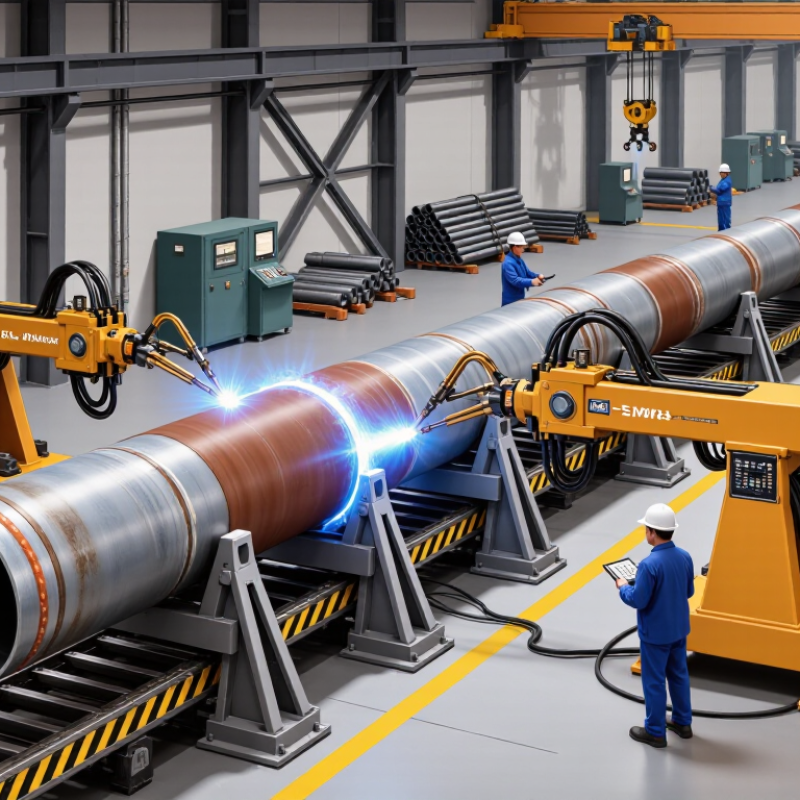
Among China’s top 10 dual-torch pipeline welding machine options, the core question is how the system works. A dual-torch pipeline welding machine is automated equipment designed to weld two sections of pipe at the same time. It uses two synchronized welding heads, controlled movement, and a shared power or process system. The torches may work on opposite sides of a joint or follow separate weld paths. This arrangement can improve productivity during repetitive pipeline fabrication. Precision matters.

In real workshops, operators first align and clamp the pipe carefully. The machine then controls travel speed, torch angle, arc length, and heat input. Sensors or preset programs can help maintain a consistent bead around the circumference. Two torches also reduce idle time when long weld seams must meet production targets. However, faster does not automatically mean better. Poor fit-up can create uneven penetration, porosity, or excessive weld buildup. Field experience shows that small alignment errors often become obvious only after inspection.

A reliable setup requires qualified welders, approved welding procedures, and routine calibration. The operator still checks gas flow, wire feeding, cooling, and torch synchronization. Inspection may include visual checks, dimensional measurement, and suitable nondestructive testing. The best machine is not always the most complex one. It should match pipe diameter, material, wall thickness, joint design, and production volume. One practical limitation is flexibility. A dual-torch system may need more setup time for unusual diameters or repairs. That trade-off deserves honest evaluation before purchase.

China Top 10 Dual Torch Pipeline Welding Machine Brands? - What Is a Dual-Torch Pipeline Welding Machine?
No. Data Dimension Factual Technical Data Why It Matters in Pipeline Welding
1 Definition A dual-torch pipeline welding machine uses two welding torches mounted on one mechanized carriage or welding head to weld two areas of a pipe joint during the same operating cycle. The two torches can work simultaneously, sequentially, or with coordinated travel, depending on the welding procedure and machine control system.
2 Main Productivity Benefit Two torches can reduce the number of welding passes or increase deposition productivity when the qualified welding procedure permits simultaneous operation. Actual productivity depends on pipe diameter, wall thickness, weld-process parameters, joint design, preheating, inspection requirements, and operator setup time.
3 Common Welding Processes Typical process combinations include GMAW/MIG, FCAW, GTAW/TIG, and combinations such as GTAW for the root pass with GMAW or FCAW for fill and cap passes. The selected process must match the approved welding procedure, base material, consumable classification, shielding-gas requirements, and required weld quality.
4 Torch Arrangement Common layouts include two torches operating on opposite sides of the pipe circumference, two torches following one another, or two independently adjustable torches on one carriage. Adjustable torch spacing and angle help maintain the correct arc position when pipe diameter, joint geometry, or welding sequence changes.
5 Motion Axes A mechanized system generally controls circumferential travel and may also provide torch oscillation, wire-feed control, vertical adjustment, lateral adjustment, and automatic start/stop functions. Independent adjustment of each torch improves control of arc length, bead placement, overlap, and heat distribution around the joint.
6 Pipe Compatibility Compatibility is determined by the machine’s clamp or carriage design, pipe outside-diameter range, joint access, wall thickness, and maximum permissible equipment load. There is no universal pipe-size range for all dual-torch machines; the manufacturer’s technical specification and the qualified procedure must be checked for each application.
7 Control and Synchronization Key control functions include synchronized travel speed, individual welding-current control, voltage control, wire-feed speed, oscillation width, dwell time, and crater-fill settings. Synchronization prevents the two torches from interfering with one another and helps maintain consistent heat input and bead geometry.
8 Heat Input Management Heat input is affected by welding current, arc voltage, travel speed, process efficiency, torch spacing, and the number of active arcs. Heat input must remain within the approved welding procedure range to control penetration, hardness, distortion, hydrogen-related risks, and toughness.
9 Applicable Qualification Frameworks Pipeline welding procedures are commonly qualified under applicable requirements such as API 1104, ASME BPVC Section IX, ISO 15614-1, or project-specific specifications. Welder qualification may use ISO 9606-1 or another applicable code. The governing code depends on the pipeline owner, jurisdiction, service conditions, material, and project contract. A machine itself does not replace procedure or welder qualification.
10 Inspection and Quality Control Typical quality controls include visual inspection, dimensional checks, welding-parameter recording, non-destructive testing, and verification of preheat and interpass temperatures. Common NDT methods may include radiographic testing, ultrasonic testing, magnetic particle testing, or liquid penetrant testing, selected according to the applicable code and project specification.
Technical note: Dual-torch performance is application-dependent. Pipe diameter, material grade, wall thickness, joint design, consumables, welding procedure qualification, environmental conditions, and inspection requirements should be confirmed before equipment selection.

Criteria for Ranking the Top 10 Brands

China Top 10 Dual Torch Pipeline Welding Machine Brands?

A credible ranking must measure performance, not advertising visibility. Market reports from MarketsandMarkets and Grand View Research show steady global growth in welding equipment demand, driven by automation, infrastructure, and productivity requirements. However, these reports rarely separate dual-torch pipeline systems. Therefore, rankings should combine market evidence with machine-level testing.

Technical capability receives the highest weight. Evaluators should examine synchronized torch control, penetration consistency, travel speed, arc stability, and heat-input management. A machine that completes more welds per shift is not automatically better. Weld quality must remain stable across changing wall thicknesses and outdoor conditions. Field proof matters. Independent testing should follow recognized procedures such as API 1104 and ISO 3834 quality principles, where applicable.

Reliability deserves equal attention. Ranking criteria should include duty cycle, control-system fault rates, spare-parts availability, operator training, and response time for service requests. A practical review should inspect weld logs, maintenance records, and customer acceptance data. Total cost of ownership matters more than the purchase price. Energy use, wire consumption, torch replacement, and downtime can reshape the final ranking. Supplier manufacturing capacity and documented quality systems, including ISO 9001 certification, also improve confidence.

Safety features must be verified through manuals and real demonstrations. Software updates, emergency stops, shielding-gas monitoring, and electrical protection should be clearly documented. Customer references from pipeline contractors add authority, but testimonials alone are weak evidence. A ranking is never perfect. Different terrains and pipe specifications can change the results, so transparent scoring and repeatable testing remain essential.

Top 10 Dual-Torch Pipeline Welding Machine Brands

The Top 10 Dual-Torch Pipeline Welding Machine Brands should be judged by field performance, not advertising claims. Dual-torch systems can reduce repositioning time and improve weld consistency on long pipe sections. Buyers should examine wire-feed stability, torch alignment, travel control, and service response. A machine may look impressive in a showroom, yet struggle with wind, dust, or uneven pipe preparation.

MarketsandMarkets estimates that the global welding equipment market could reach USD 26.8 billion by 2028, growing at a 4.7% CAGR from 2023. The International Federation of Robotics recorded 541,302 industrial robot installations worldwide in 2023. These figures show strong automation demand, but they do not prove that every dual-torch solution fits pipeline work. Real evaluations should include deposition rate, arc stability, heat input control, and downtime records. A perfect ranking is difficult. Site conditions often change the result.

Tips:Request a live weld demonstration using your pipe diameter, wall thickness, and approved procedure. Check whether both torches maintain equal travel speed. Review calibration certificates, operator training, spare-part availability, and local technical support. Also ask for independent productivity data. Marketing figures can be optimistic, sometimes too optimistic. A short field trial may reveal more than a polished brochure.

Key Features and Technologies Compared

Comparing China’s top ten dual torch pipeline welding machine brands requires more than checking output speed. The key test is process control. According to MarketsandMarkets’ 2024 Welding Equipment Market report, the global market may grow from about USD 18.9 billion in 2024 to USD 24.5 billion by 2029. This growth reflects rising demand for automated and semi-automated welding systems.

Dual torch machines should provide synchronized travel, stable wire feeding, and independent current adjustment. Closed-loop control can correct voltage changes during long welds. Seam tracking also matters when pipe alignment is imperfect. Some systems record current, voltage, travel speed, and gas flow. These records support quality reviews under API 1104 and ASME Section IX practices. Field technicians should also inspect cooling capacity, torch clearance, cable durability, and emergency stop response.

Not every “automatic” model performs equally. A machine may advertise high amperage, yet struggle with arc stability on uneven pipe surfaces. That is a practical weakness. I would compare bead consistency, restart performance, and calibration access before trusting a catalogue rating. The Grand View Research 2024 welding equipment analysis also identifies automation and monitoring as major market drivers. However, factory demonstrations can hide field problems. Test samples should include thick-wall pipe, changing joint gaps, and repeated starts. Small details matter. A clear interface helps, but software reliability matters more.

How to Choose the Right Brand for Your Pipeline Project

Choosing a dual torch pipeline welding machine starts with project conditions, not a familiar logo. The U.S. PHMSA 2023 inventory records about 301,000 miles of gas transmission pipelines. That scale demands repeatable weld quality, stable arc control, and dependable field support. Ask whether the manufacturer can provide procedure qualification records, calibration certificates, and training aligned with API 1104 and ISO 3834.

A dual torch system can improve productivity, but only when both torches maintain synchronized travel speed, current, voltage, and wire feed. Review the rated duty cycle at your actual amperage, not the maximum figure on a brochure. Check performance in wind, dust, humidity, and uneven terrain. Practical details matter: remote controls, torch cooling, cable length, generator compatibility, and fast replacement parts. Request test welds using your pipe grade, wall thickness, shielding gas, and consumables.

Reliability also depends on data. The International Energy Agency’s Global Methane Tracker 2024 highlights the need to reduce emissions from oil and gas operations. Better weld consistency can reduce repairs, shutdowns, and avoidable material waste. Still, higher output is not automatically better. My own preference can be biased toward proven equipment, while newer designs may offer useful automation. Compare independent service records, documented failure rates, warranty response times, and operator feedback from similar terrain. A low purchase price may become expensive after one failed site test.

China Top 10 Dual Torch Pipeline Welding Machine Brands? How to Choose the Right Brand for Your Pipeline Project

The chart presents a practical 100-point evaluation framework for comparing dual-torch pipeline welding machines without ranking individual companies. Welding current stability and duty cycle receive the highest weight because they directly affect weld consistency, productivity, and continuous field operation. Buyers should also verify output range, wire compatibility, protection rating, service availability, and machine portability against project conditions.

Get In Touch

Drop Us A Message

    Our Contact Details

    • IPS Group BV | Head Office (NB), Technopol 4, 5026 SB Tilburg, The Netherlands

      IPS Group BV | Rhijnspoor 239, 2901 LB Capelle a/d IJssel, The Netherlands
    • sale@qbhardware.org
    • +31 (0) 10 303 2625