How to Choose the Right Check Valves for Your Needs?
Choosing the right check valves can be challenging. These devices play a crucial role in fluid systems, ensuring one-way flow to prevent backflow. Understanding the specific requirements of your system is essential. This guide will help you navigate options based on key factors, such as application, material, and pressure ratings.
Check valves come in various designs and materials. Selecting the most appropriate one requires knowledge of your unique system needs. This process often involves evaluating flow rates and the nature of the fluids involved. Different environments demand different check valves, adding to the complexity of the decision. There isn’t a one-size-fits-all solution.
Reflection on past experiences can be valuable. Some users find it challenging to balance costs with performance. It’s vital to prioritize reliability over initial costs. A poorly chosen check valve can lead to system failures. Therefore, taking the time to analyze all options is critical for long-term success.
Understanding the Functionality of Check Valves in Fluid Systems
Check valves play a crucial role in fluid systems. They ensure that flow only moves in one direction, preventing backflow. This functionality is essential in many applications, from water treatment to industrial processes. Understanding how these valves function can help in selecting the right one for your specific needs.
Check valves operate by using a movable element, like a disc or ball. When fluid flows in the desired direction, the element lifts and allows passage. If flow reverses, the element closes, blocking the backflow. This mechanism can vary among different types of check valves, each suited for specific conditions. For instance, a spring-loaded valve closes quickly but may wear out faster. Reflecting on your system requirements will guide you in making the right choice.
Choosing the appropriate check valve also involves considering factors like pressure and temperature. High-pressure environments demand stronger materials. Even small mismatches can lead to failures, causing downtime and costly repairs. It's worth analyzing past experiences to avoid repeating mistakes. While there is no one-size-fits-all solution, careful evaluation can lead to better outcomes.
Types of Check Valves and Their Applications
Check valves are essential components in various systems. They prevent backflow and ensure smooth operation. Understanding the different types is crucial for making informed choices.
There are several types of check valves, each with unique features.
Swing check valves allow fluid to flow in one direction, utilizing a hinged disk. They are best for low-pressure applications.
Lift check valves use a disc that moves up and down, providing better sealing in high-pressure situations. Diaphragm check valves are ideal for handling slurries or corrosive materials, offering excellent resilience.
Selecting the right valve is not always straightforward. Assessing system pressure, fluid type, and installation orientation requires careful thought. It’s vital to consult with industry experts or reliable resources to ensure the right fit. Being informed can prevent costly mistakes and ensure efficient system performance.
Factors to Consider When Selecting Check Valves
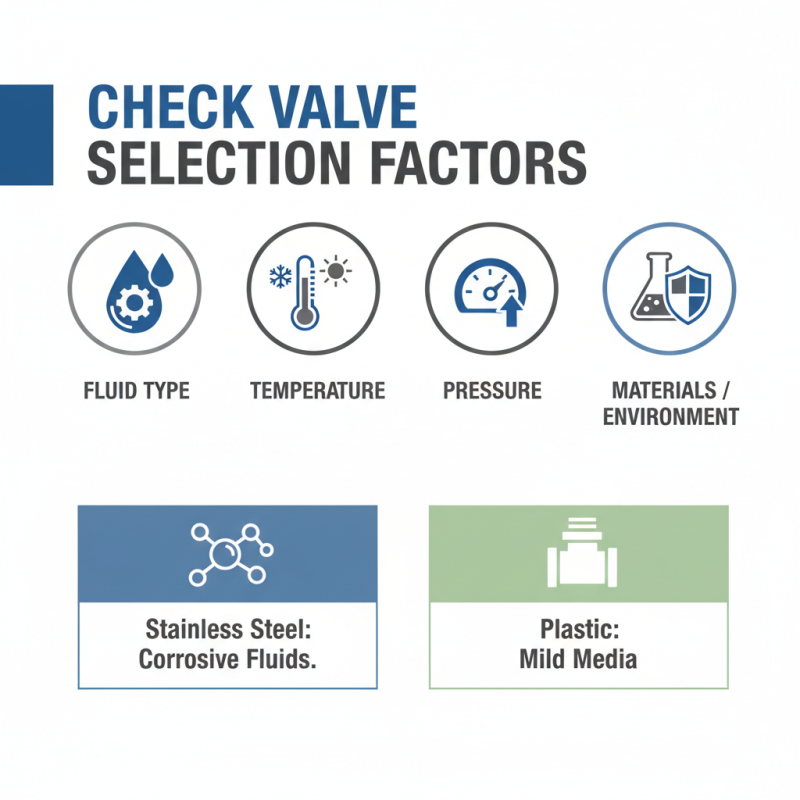
When selecting check valves, several factors are crucial. The application and environment play a significant role. Consider the fluid type, temperature, and pressure. Different materials withstand various conditions, so choose accordingly. For example, stainless steel is ideal for corrosive fluids, while plastic works well for less aggressive media.
Tips: Always assess the installation space. Valves come in different sizes, and clearance could be an issue. Ensure there is enough space for maintenance and replacement.
Another essential factor is the flow direction. Check valves only allow fluid to flow in one direction. Choose a valve that suits your system's design. Misalignment can lead to failure, so double-check your setup.
Tips: Regular inspections can catch potential issues. Look for wear or deformities, especially after prolonged use. Small changes can lead to significant problems if not addressed.
Lastly, think about the type of operation. Some check valves have spring mechanisms, while others rely on gravity. The choice impacts performance and maintenance needs. Understanding these details helps ensure optimal valve performance.
Material Compatibility and Environmental Considerations
When selecting check valves, material compatibility and environmental considerations play a crucial role. Using the wrong material can lead to valve failure, which impacts system efficiency. A 2022 industry report from the Valve Manufacturers Association emphasizes that improper material selection causes up to 30% of maintenance issues in fluid systems.
Different materials react uniquely to various substances. For example, stainless steel withstands high temperatures and corrosive environments. In contrast, PVC is suited for chemical processing but may degrade under UV exposure. Each application demands careful evaluation of these factors. A study showed that about 40% of operators reported issues due to inadequate material choices.
Tips: Always consult with material data sheets before making a decision. Regularly review your valve performance to detect early signs of wear.
Consider the environmental conditions where the valve will operate. Factors like temperature, pressure, and fluid types significantly influence material life spans. A mismatch can shorten service life, causing unexpected costs. In one case, a company faced a two-month delay due to valve misselection, demonstrating the real-world implications of poor choices.
How to Choose the Right Check Valves for Your Needs? - Material Compatibility and Environmental Considerations
| Material |
Compatibility |
Temperature Range (°C) |
Pressure Rating (bar) |
Application Environment |
| Stainless Steel |
Corrosive fluids |
-50 to 250 |
10 |
Chemical processing |
| PVC |
Water, sewage |
0 to 60 |
6 |
Wastewater management |
| Brass |
Water, gas |
-20 to 100 |
8 |
Plumbing systems |
| Ductile Iron |
Slurry, wastewater |
-30 to 80 |
16 |
Mining, heavy industry |
| Teflon |
Highly corrosive chemicals |
-100 to 200 |
5 |
Laboratory settings |
Evaluating Performance Standards and Specifications for Check Valves
When evaluating performance standards for check valves, it's essential to consider the specific requirements of your system. The valve's design must align with the application's pressure and temperature. Testing results should meet industry standards, ensuring reliability and safety. Understand the flow characteristics of your system to prevent issues, such as backflow.
Another key aspect is the material of the check valve. Choosing the right material affects durability and resistance to corrosion. For harsh environments, robust materials are crucial. Look for specifications on seals and body construction to ensure long-term performance. Keep in mind, not all valves perform the same under every condition. Some may fail when tested beyond their specified limits.
Installation also plays a significant role in valve performance. Proper alignment can prevent wear and increase lifespan. Misalignment can lead to failure and costly repairs. Thus, understanding the installation specifications and following guidelines is essential. Performance is not just about the valve itself but also how it integrates into the overall system.
Performance Evaluation of Check Valves
This chart illustrates the performance standards of different types of check valves based on their flow rate efficiency and pressure drop during operation.