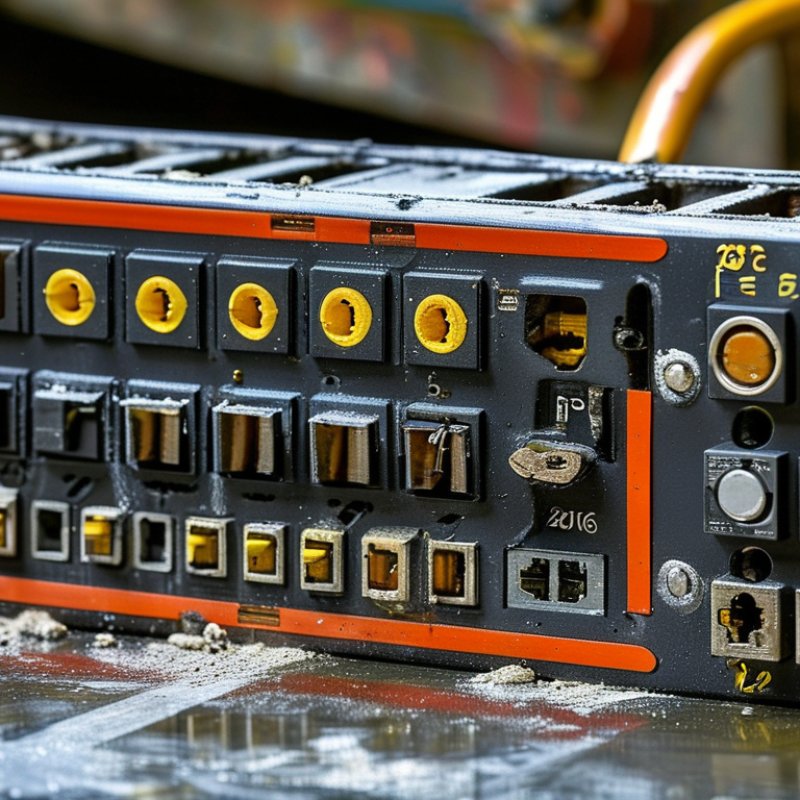
| Panel-Mount Cartridge Holder | 5 × 20 mm or 6.3 × 32 mm cylindrical cartridge fuses | 125–250 V AC Up to about 15 A | Front-panel mounting with a threaded body, nut, or snap-fit mechanism | Power supplies, laboratory equipment, appliances, control panels, and consumer electronics | Easy fuse replacement; suitable for visible and accessible equipment protection | Check fuse size, voltage rating, current rating, interrupting rating, touch protection, and panel cutout dimensions |
| PCB-Mount Fuse Holder | 5 × 20 mm, 6.3 × 32 mm, or miniature cartridge fuses | 125–250 V AC Typically 1–15 A | Through-hole or surface-mount attachment directly to a printed circuit board | Power adapters, industrial controllers, instrumentation, chargers, and embedded power supplies | Compact assembly; reduces wiring and simplifies automated PCB production | Verify PCB footprint, terminal temperature rise, creepage and clearance, fuse replacement access, and mechanical retention |
| Inline Fuse Holder | Automotive blade fuses, glass tube fuses, or miniature cartridge fuses | 12–32 V DC common Approximately 5–60 A | Installed in series with a cable; commonly uses crimp, solder, or sealed cable connections | Automotive accessories, battery wiring, LED systems, portable equipment, and low-voltage DC circuits | Flexible installation; protects a circuit close to the power source | Match the holder to the fuse family, cable cross-section, environmental sealing level, DC voltage, and continuous current |
| Automotive Blade Fuse Holder | Micro, low-profile mini, mini, standard, or maxi blade fuses | 12–32 V DC typical Up to about 100 A depending on format | Inline, panel-mounted, or integrated into a vehicle fuse box | Passenger vehicles, commercial vehicles, agricultural machinery, marine equipment, and battery distribution | Fast identification and replacement; widely available fuse formats; compact design | Confirm terminal compatibility, fuse cavity rating, vibration resistance, temperature rating, polarity requirements, and wire size |
| Bolt-Down High-Current Holder | Stud-mounted strip, MIDI-style, MEGA-style, or other bolt-down fuses | 12–80 V DC common Approximately 30–500 A | Bolted to busbars, cables, battery terminals, or a mounting plate | Battery banks, inverters, electric vehicles, marine power systems, and industrial DC distribution | Handles high continuous current and strong mechanical loads; supports low-resistance connections | Evaluate short-circuit current, torque requirements, busbar spacing, heat dissipation, enclosure protection, and service clearance |
| DIN-Rail Modular Fuse Holder | Cylindrical industrial fuses such as 10 × 38 mm, 14 × 51 mm, or 22 × 58 mm formats | 400–690 V AC common Up to about 125 A | Mounted on standard DIN rail inside an electrical distribution enclosure | Industrial control cabinets, motor circuits, photovoltaic combiner boxes, and building distribution systems | Organized installation; clear circuit identification; optional indication and auxiliary contacts on some designs | Check fuse class, utilization category, pole count, rated conditional short-circuit current, enclosure spacing, and heat dissipation |
| High-Speed Semiconductor Fuse Holder | Square-body or cylindrical high-speed semiconductor fuses | Up to 1,000 V AC/DC depending on system High fault-current applications | Bolted, clip-in, or busbar-mounted construction | Variable-frequency drives, soft starters, rectifiers, battery converters, and power-electronics equipment | Designed for rapid fault interruption and controlled heat transfer to protect semiconductor devices | Match the fuse class, I²t value, power loss, contact pressure, cooling requirements, and manufacturer-specified mounting torque |
| Resettable Circuit Protector Holder | Thermal circuit breakers or push-to-reset protectors rather than one-time fuses | Low-voltage AC/DC Commonly below 50 A | Panel, PCB, or inline mounting | Power distribution panels, battery-powered devices, audio equipment, and equipment requiring frequent overload recovery | Can be reset without replacing a fuse; useful where service interruptions must be minimized | Confirm trip curve, interrupting capacity, ambient-temperature derating, number of reset cycles, and suitability for the load type |