How to Choose the Right Vehicle Wedge Barrier?

Choosing the right Vehicle Wedge Barrier begins with understanding the site, not simply comparing product prices. A barrier protecting a government entrance may require different performance from one serving a warehouse, hotel, or private facility. Traffic volume, vehicle weight, approach speed, road width, drainage, and emergency access all influence the decision. Small details matter. A narrow lane can change everything.

Bruce Schneier, a respected security technologist, states, “Security is a process, not a product.” His observation applies directly to Vehicle Wedge Barrier selection. Effective protection depends on the barrier, foundation, controls, warning systems, maintenance, and trained operators working together. A strong wedge barrier installed on weak concrete will not deliver reliable protection. Nor will advanced equipment compensate for poor sightlines or careless access procedures.

This guide examines important questions before purchase. Should the site use a shallow-mount or deep-mount design? What impact rating matches the realistic threat assessment? Can the barrier operate during power failure, flooding, snow, or heavy daily traffic? Certified test results deserve careful review, but paperwork alone is not enough. Installation quality and service support often decide long-term performance.

There is no perfect selection.

Budget pressure can encourage compromises, and those compromises may remain invisible until failure occurs. A responsible evaluation compares tested performance, operating speed, safety features, lifecycle cost, and supplier experience. It also considers pedestrians, bicycles, emergency vehicles, and accessible routes. The best Vehicle Wedge Barrier is not always the largest model. It is the system that fits the site, performs consistently, and remains manageable after installation.

How to Choose the Right Vehicle Wedge Barrier?

What Is a Vehicle Wedge Barrier and How Does It Work?

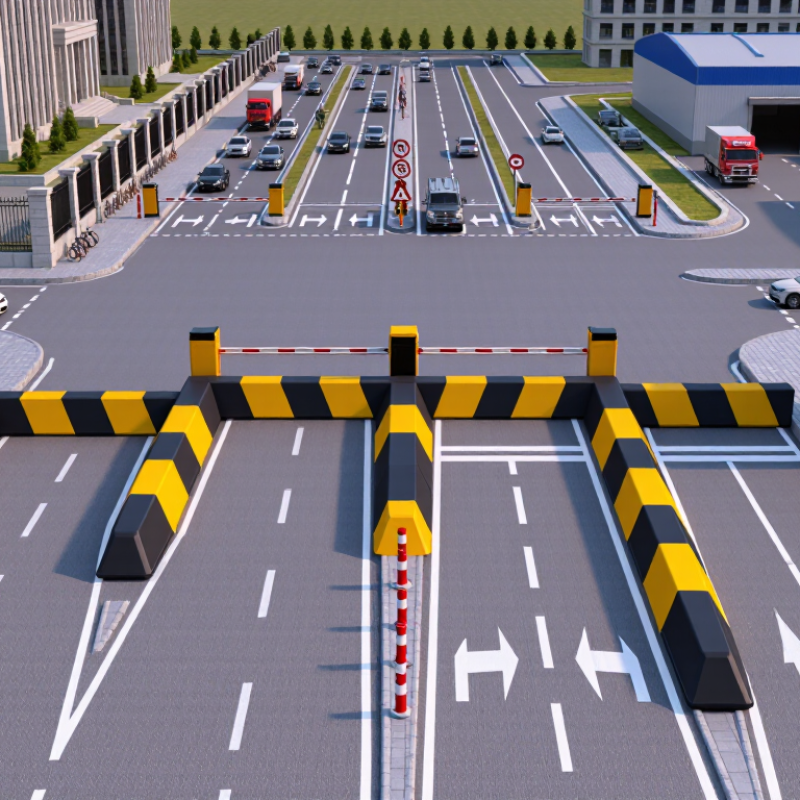
A vehicle wedge barrier is a steel road blocker designed to control vehicle access. Its angled plate rises from the pavement and creates a strong physical obstruction. When access is approved, the plate lowers into a reinforced trench. Hydraulic or electromechanical equipment usually drives this movement. Sensors and a control cabinet coordinate opening, closing, and safety detection.

The barrier must match the site, not just the threat assessment. A careful evaluation considers vehicle weight, approach speed, lane width, traffic frequency, and available foundation depth. A high-security model may need deep concrete support and a certified impact rating. A lighter system may suit controlled entrances with slower traffic. Drainage also matters. Water trapped inside the pit can damage moving parts and shorten service life. Small details matter.

Plan for people, too. Induction loops, photoelectric sensors, warning lights, and manual release controls can reduce accidental movement. Maintenance access should be practical, even during rain or winter conditions. The first design is rarely perfect. A wedge barrier can control a vehicle lane, but it cannot repair poor traffic planning. Emergency access, pedestrian routes, and power failure behavior need separate review. In real installations, clear sightlines often matter as much as steel strength. That point is easy to overlook.

Which Security Risks Should the Barrier Address?

A vehicle wedge barrier should address more than forced entry. It must match the site’s actual threat profile, traffic pattern, and response time. A delivery gate may face heavy trucks, distracted drivers, or repeated impact risks. A government entrance may require stronger protection against deliberate high-speed approach. These scenarios need different stopping capacities and operating speeds.

Measure vehicle weight, approach distance, road width, and available stopping space before selecting equipment. A short approach gives drivers less time to react. In that case, warning lights, audible signals, lane markings, and clear sightlines become essential. The barrier should also manage tailgating, unauthorized reversing, and pedestrian movement near the lane. Safety sensors can help prevent the wedge from rising beneath a vehicle or trapping a person. Small details matter.

Power failure is another serious risk. Check whether the system can move safely during outages, communication loss, or flooding. Drainage around the pit deserves attention too. Standing water can damage components and weaken daily reliability. Independent impact testing, documented maintenance procedures, and trained operators provide stronger evidence than a dramatic product photograph. No design is perfect. I have seen security plans focus on impact resistance while overlooking emergency access and routine inspection. That gap can create problems during ordinary traffic, not only during an attack. A practical barrier should stop a credible vehicle threat without creating a greater hazard for authorized users.

How to Compare Barrier Types, Sizes, and Impact Ratings

How to Choose the Right Vehicle Wedge Barrier?

A vehicle wedge barrier should match the site, not merely its catalog rating. Compare shallow-mount and deep-mount designs first. Shallow systems suit restricted foundations, while deep systems often provide greater structural support. However, soil, drainage, utilities, and stopping distance can change that decision. Check the tested vehicle mass and speed behind each impact rating. A rating matters only when test conditions match your security assessment. Ask for independent test evidence, installation limits, and maintenance records. A strong rating can still disappoint when the foundation is weak.

Size matters at the lane level. Measure the clear opening, barrier height, road slope, and turning path of service vehicles. A narrow wedge may leave vulnerable edges. An oversized unit can scrape low vehicles or obstruct emergency access. Review cycle speed, warning lights, sensors, and manual override requirements with the operator. Small details matter. Water pooling around the hinge can become a stubborn failure point. Site reviews often reveal missing drainage plans and poor replacement access. That deserves a second look.

Tips: Compare at least three systems using the same vehicle mass, speed, penetration limit, and mounting condition. Visit an installed site if possible. Watch the barrier cycle during rain and heavy traffic. Do not select by rating alone. Record your assumptions, then challenge them.

What Site Conditions Affect Barrier Selection and Installation?

How to Choose the Right Vehicle Wedge Barrier?

What Site Conditions Affect Barrier Selection and Installation?

Vehicle wedge barrier selection should begin with the site, not a product catalog. Measure road width, approach speed, turning radius, drainage, utilities, and emergency access. A narrow lane may require a shallow barrier, while a wide entrance may need coordinated units. Small errors matter.

ASTM F2656-20 evaluates barriers by vehicle weight, impact speed, and penetration distance. Its ratings include test conditions such as a 5,000-pound vehicle at 30 mph and a 15,000-pound vehicle at higher speeds. Therefore, a “high-security” label means little without a matching threat assessment. The U.S. Department of Homeland Security’s Vehicle Ramming Mitigation Security Guide also recommends assessing vehicle paths, standoff distance, and operational procedures before installation.

Ground conditions often change the engineering answer. Poor soil, buried cables, high groundwater, or a shallow water table can make deep foundations impractical. Drainage is easy to underestimate. A flooded pit can disable equipment, increase corrosion, and create unsafe maintenance access. In coastal areas, chloride exposure demands suitable materials and protective detailing. ASCE 7-22 wind-load provisions may also affect raised components and nearby gates, especially at exposed entrances.

I would not trust a site drawing alone. A physical survey should confirm slopes, pavement thickness, turning behavior, and service routes. One overlooked delivery vehicle can force daily obstruction or unsafe reversing. The installation plan should also test power failure, snow clearance, inspection access, and emergency override procedures. A technically strong barrier can still fail operationally.

How to Evaluate Safety Features, Maintenance, and Total Cost

Choosing a vehicle wedge barrier starts with safety, not appearance. Examine its stopping capacity, wedge height, penetration resistance, and response time. Ask for independent test records, installation drawings, and clear operating limits. A barrier should coordinate with access controls, emergency procedures, and nearby pedestrian routes. Poorly planned placement can create new hazards.

Maintenance determines whether protection remains dependable after years of daily use. Check the actuator, hinges, drainage, sensors, and warning lights during a site inspection. Ask how technicians reach moving parts and how long common repairs usually take. Review service intervals, spare-part availability, inspection reports, and weather resistance. I once underestimated drainage needs on a similar project. Water and grit caused avoidable wear. That mistake changed how I assess installation details.

Tips: Compare the total cost, not only the purchase price. Include civil works, electrical upgrades, inspections, training, energy use, repairs, and downtime. Request a five-year cost estimate with realistic traffic volumes. A cheaper barrier may require frequent servicing. A premium system may still be unsuitable if its capacity exceeds your site needs. Speak with qualified installers and request references from comparable locations. Their records may reveal weaknesses that brochures never mention. Always leave room for uncertainty. Site conditions change.

How to Choose the Right Vehicle Wedge Barrier? - How to Evaluate Safety Features, Maintenance, and Total Cost
Evaluation Dimension Low-Profile Wedge Barrier Standard High-Security Wedge Barrier Heavy-Duty High-Security Wedge Barrier What to Check Before Purchase Selection Guidance
Typical Application Commercial entrances, parking facilities, and sites with moderate vehicle threats. Government, utility, transport, and critical-infrastructure access points. High-risk perimeters, controlled facilities, and locations requiring certified vehicle impact resistance. Threat assessment, traffic volume, available road width, and required security level.
Visible Height Approximately 250–400 mm Approximately 400–600 mm Approximately 500–700 mm Confirm that the raised height provides adequate obstruction without blocking required sight lines. Higher wedges generally provide stronger physical obstruction but may require greater civil-work depth and clearance.
Roadway Coverage Commonly supplied in modular sections for single-lane or partial-lane coverage. Typically configured for a full lane, with additional sections for wider entrances. Usually engineered as a full-width system with reinforced foundations and heavy structural components. Measure lane width, turning radius, curb position, drainage channels, and emergency bypass routes.
Impact Performance May provide deterrence and access control; certification varies significantly by model. Often available with independently tested vehicle-impact ratings. Designed for severe impact scenarios and may meet recognized crash-test standards when properly installed. Request the exact test standard, vehicle mass, impact speed, penetration result, and test configuration. Do not treat a product description such as “crash-rated” as sufficient evidence without test documentation.
Crash-Test Documentation May be limited to factory specifications or non-certified testing. Typically supported by a formal test report for a defined vehicle and speed condition. Should include an independent laboratory report and installation conditions matching the proposed site. Check whether the test covered the complete system, including foundation, controls, and end terminals.
Actuation Type Hydraulic, electromechanical, or pneumatic systems may be available. Hydraulic actuation is common where high force and reliable cycling are required. Heavy-duty hydraulic systems are often preferred for large, high-load barriers. Review local climate, power quality, available hydraulic-service expertise, and duty cycle. Choose an actuator that can complete the required cycles without overheating or excessive wear.
Typical Raising Time Approximately 3–8 seconds Approximately 3–6 seconds Approximately 4–10 seconds Confirm whether the stated time is measured under normal load, cold conditions, and emergency operation. Balance speed with stopping distance, safety, structural load, and site operating procedures.
Emergency Lowering May use manual release, battery backup, or mechanical override. Should include a clearly accessible manual or powered emergency-lowering method. Should include redundant controls and a documented safe-state procedure. Test operation during power failure, fire alarm activation, communications loss, and control-panel faults.
Vehicle and Pedestrian Safety Requires warning signs, signal lights, audible alerts, and vehicle-presence detection. Should integrate inductive loops, photoelectric sensors, traffic lights, and interlocking controls. Normally requires multiple detection zones, anti-tailgating logic, and protected pedestrian routing. Verify detection of motorcycles, bicycles, low-clearance vehicles, pedestrians, and objects on the wedge.
Control Integration Remote control, keypad, card reader, or basic access-control input. Access-control, intercom, CCTV, loop detector, and building-management integration. Redundant security controls, central monitoring, event logging, and emergency-system integration. Confirm interface types, cybersecurity requirements, operating permissions, and audit-log retention. Prefer open, documented interfaces to reduce dependence on a single control platform.
Drainage and Environmental Protection Requires effective drainage in the pit to prevent water accumulation and corrosion. Should include pit drainage, corrosion-resistant finishes, and sealed electrical components. Requires engineered drainage, robust coatings, protected hydraulic components, and cold-weather provisions where applicable. Assess groundwater, rainfall, flooding, salt exposure, dust, freezing temperatures, and snow removal. Poor drainage is a common cause of corrosion, sensor faults, hydraulic contamination, and downtime.
Civil Works Often has the lowest excavation and foundation requirement, subject to soil conditions. Usually requires a reinforced pit, drainage system, conduits, and concrete foundation. May require deeper excavation, stronger reinforcement, larger equipment access, and structural review. Obtain foundation drawings, soil data, utility maps, groundwater information, and road-loading requirements. Compare the complete installed solution, not only the barrier unit price.
Routine Maintenance Visual inspection, cleaning, lubrication, sensor testing, and drainage checks. All low-profile tasks plus hydraulic inspection, control testing, and fastener checks. More frequent structural, hydraulic, electrical, and foundation inspections due to higher loads. Ask for the maintenance schedule, service intervals, spare-parts list, and technician qualifications.
Suggested Inspection Frequency Operator checks daily; formal preventive service every 3–6 months. Operator checks daily; formal preventive service at least every 3–6 months. Operator checks daily; formal preventive service commonly every 1–3 months in high-cycle use. Adjust frequency for traffic volume, weather, impact events, and manufacturer requirements. Follow the stricter requirement when site conditions and supplier recommendations differ.
Expected Service Life Approximately 10–15 years with suitable installation and preventive maintenance. Approximately 10–20 years depending on duty cycle, environment, and component replacement. Approximately 15–25 years for the structure, with controls, seals, sensors, and hydraulic parts replaced sooner. Separate structural life from the service life of pumps, seals, sensors, batteries, controls, and coatings. Service-life estimates are not warranties and depend heavily on installation quality and maintenance.
Indicative Equipment Cost Approximately USD 15,000–35,000 Approximately USD 30,000–70,000 Approximately USD 60,000–150,000+ Request a quotation that identifies the barrier, actuator, controls, sensors, and accessories separately. Use these ranges only for early budgeting; certified performance and site requirements can change the price substantially.
Indicative Installation Cost Approximately USD 10,000–30,000 Approximately USD 20,000–60,000 Approximately USD 40,000–120,000+ Include excavation, concrete, drainage, electrical work, traffic management, commissioning, and reinstatement. Civil works can exceed the equipment cost where utilities, groundwater, or difficult soil are present.
Estimated Annual Maintenance Approximately 3–6% of equipment cost Approximately 4–8% of equipment cost Approximately 5–10% of equipment cost Confirm whether the estimate includes labor, travel, consumables, testing, software support, and replacement parts. Budget more for coastal, dusty, freezing, flood-prone, or high-cycle environments.
Downtime Risk Moderate when drainage, sensors, and basic controls are neglected. Moderate to low with a service contract and locally available spare parts. Low when redundant controls and scheduled specialist maintenance are provided; repairs may be more complex. Check local response time, critical spare-parts availability, remote diagnostics, and manual operating procedures.
Total Cost of Ownership Lower initial cost, but greater suitability risk if the threat level is underestimated. Balanced option for sites requiring documented protection and regular vehicle access. Highest initial and civil-work cost, but appropriate where severe vehicle impact risk justifies the investment. Compare purchase, installation, energy, inspections, parts, labor, downtime, upgrades, and end-of-life replacement.
Best-Fit Decision Choose when the site has moderate risk, limited excavation depth, and a strong need to control project cost. Choose when independently tested impact performance, daily operation, and maintainability are required. Choose when the risk assessment requires high-impact resistance and the site can support substantial civil works. Obtain a site survey, threat assessment, foundation design, crash-test evidence, maintenance plan, and lifecycle quotation.
Budgeting note: Cost figures are broad, non-branded planning ranges in USD for a single access lane. Actual costs vary with certified impact performance, lane width, soil and drainage conditions, local labor, electrical requirements, traffic-management work, shipping, taxes, and accessibility requirements. All safety-critical systems should be selected, installed, and tested in accordance with applicable local codes and the relevant vehicle-impact standard.

Get In Touch

Drop Us A Message

    Our Contact Details

    • IPS Group BV | Head Office (NB), Technopol 4, 5026 SB Tilburg, The Netherlands

      IPS Group BV | Rhijnspoor 239, 2901 LB Capelle a/d IJssel, The Netherlands
    • sale@qbhardware.org
    • +31 (0) 10 303 2625