China Top Camper Inverter Suppliers How to Choose?
Choosing among China’s top Camper Inverter suppliers requires more than comparing prices on a product page. A reliable Camper Inverter must perform steadily when road conditions, battery voltage, and temperatures change. It should power appliances such as refrigerators, laptops, coffee makers, and charging equipment without creating excessive noise or unstable output.
Experience matters here. A supplier may claim high efficiency, but field performance depends on circuit design, cooling, protection systems, and testing procedures. Ask for continuous output ratings, peak capacity, waveform type, efficiency data, and low-voltage protection details. A pure sine wave model is often safer for sensitive electronics. Check whether the supplier explains these points clearly.
Look closely at manufacturing evidence. Factory photographs are not enough. Request test reports, sample results, quality-control records, and details about component sourcing. Certifications should match the target market and product specifications. After-sales support also deserves attention. Can the supplier provide wiring guidance, troubleshooting help, replacement parts, and a practical warranty process?
Small details reveal professionalism. A dependable factory labels terminals clearly, supplies installation instructions, and answers technical questions without vague promises. It should also discuss ventilation, cable sizing, grounding, and battery compatibility. These issues are easy to overlook.
No supplier is perfect. Some impressive specifications may reflect laboratory conditions rather than daily camping use. Independent sample testing remains valuable. Compare at least three suppliers, inspect communication quality, and evaluate total ownership cost instead of unit price alone. The right choice combines verified performance, transparent service, and consistent manufacturing discipline. That approach reduces unpleasant surprises beside a cold campsite.
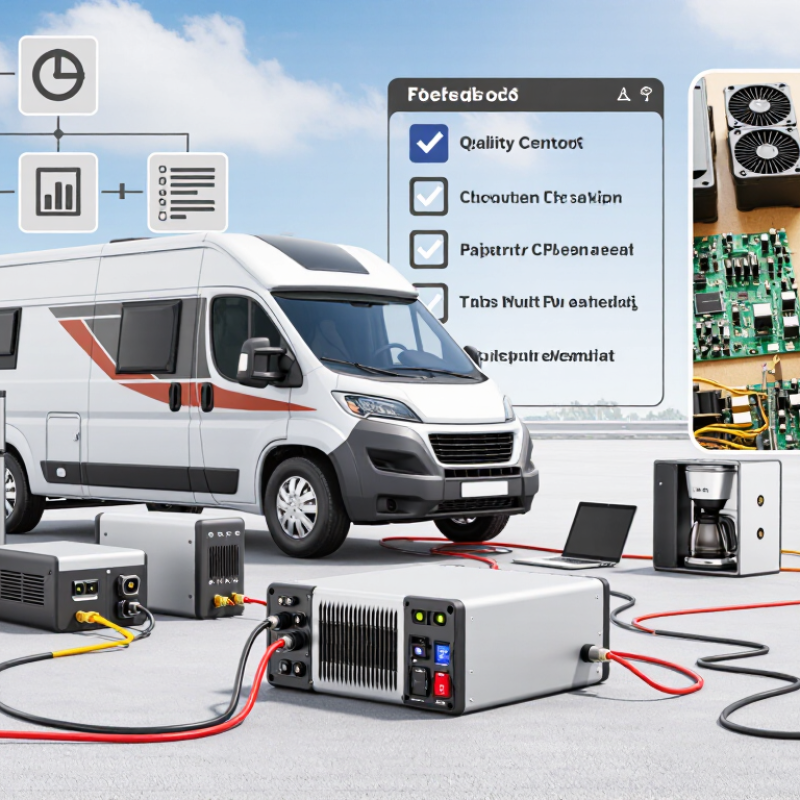
What Is a Camper Inverter and Why Does Supplier Choice Matter?
A camper inverter converts battery power into household-style AC electricity. It lets travelers run a laptop, refrigerator, camera charger, or small cooking device away from a grid connection. Most campers use 12V or 24V battery systems, so voltage compatibility must be checked before ordering. A pure sine wave model is usually safer for sensitive electronics. Capacity matters too. A 2,000-watt inverter may start a refrigerator, but its startup surge can be much higher than its running power.
Supplier choice matters because an inverter is part of a complete power system, not an isolated box. A reliable supplier should provide clear efficiency data, protection functions, wiring guidance, test records, and realistic warranty terms. Ask how the unit handles overheating, low battery voltage, overloads, and short circuits. Request sample testing when possible. Check the terminals, cooling fan, display accuracy, and noise under load. A polished website proves little.
Tips: Calculate continuous and peak loads separately. Inspect cable size and fuse recommendations. Ask for traceable quality documents. Test with your actual appliances. Do not rely only on the advertised wattage. A supplier may answer quickly yet avoid technical questions, which is a warning sign. I have also seen buyers choose the cheapest unit, then discover poor efficiency and hot cables after one weekend. That choice looked reasonable, but the measurements were missing. Good selection requires evidence, not confidence alone.
How to Compare China’s Top Camper Inverter Suppliers
Comparing China’s top camper inverter suppliers requires more than checking listed power ratings. Start with continuous output, peak surge capacity, input voltage range, and waveform quality. A pure sine wave inverter usually protects sensitive appliances better. Ask for independent test reports, efficiency curves, thermal data, and certification documents. Do not rely on product photos alone. They can hide weak terminals and poor ventilation.
Request a sample before placing a larger order. Test it with a refrigerator, charger, and induction cooker under real camper conditions. Listen for fan noise. Measure heat around the casing after several hours. I once focused too much on low pricing and overlooked standby consumption. That mistake reduced battery life noticeably. Supplier experience should include clear wiring diagrams, installation guidance, and records of similar projects. Ask how they handle firmware changes and replacement parts.
Factory communication also reveals reliability. Can the technical team explain overload protection without vague promises? Do they provide traceable quality checks for each production batch? Compare warranty length, response time, packaging strength, and delivery consistency. A supplier offering customization may adjust socket layouts, display panels, or cooling systems, but changes need written specifications. Check whether the quoted price includes testing and documentation. Small omissions become expensive later. A practical comparison sheet helps, although it may still miss field problems. Keep sample results, conversations, and fault records before choosing a long-term supplier.
How to Select the Best Camper Inverter Supplier for Your Needs
Choosing a reliable camper inverter supplier in China requires more than comparing prices. Start with your actual power needs. List appliances such as refrigerators, laptops, water pumps, and induction cookers. Add their running watts and starting surges. A capable supplier should explain these calculations clearly, not push the largest model.
Ask for technical evidence before placing an order. Check continuous output, peak power, waveform quality, battery voltage, cooling design, and low-voltage protection. Request test reports, product drawings, and samples from the same production line. Certifications matter, but they should match your destination market and product specifications. A polished certificate alone proves little. Factory audits, traceable components, and documented quality checks offer stronger confidence.
Tips: Test a sample inside your camper before bulk purchasing. Run heavy loads together for several hours. Check heat, noise, display accuracy, and restart behavior. Confirm warranty terms, spare parts, packaging strength, and response times. Ask how faults are recorded and solved. A supplier that answers with measurements feels more reliable than one using vague promises. However, no evaluation is perfect. I would still inspect random units after delivery, because small production changes can affect performance. Clear communication, stable engineering, and honest limitations often matter more than the lowest quotation.
China Top Camper Inverter Suppliers: How to Choose?
Use these practical reference benchmarks when comparing camper inverter suppliers. Confirm every value in the supplier’s datasheet, test report, warranty terms, and after-sales documentation.
A suitable camper inverter should normally support pure sine wave output, efficiency of about 90% or higher, total harmonic distortion below 5%, surge capacity around twice its continuous rating, and clear protection functions. Supplier reliability should also be checked through certification records, quality-control procedures, sample testing, warranty coverage, and technical support.