
10 Best Gas Infrastructure Companies for Global Buyers

Global buyers need more than impressive production figures when evaluating the 10 Best Gas Infrastructure Companies for Global Buyers. They need dependable networks, transparent contracts, strong safety records, and practical delivery capacity.

Gas Infrastructure includes pipelines, processing plants, storage terminals, LNG facilities, and digital monitoring systems. Each asset affects supply security, operating costs, and long-term resilience. Daniel Yergin, vice chairman of S&P Global, has observed, “The energy transition is not a straight line.” That reminder matters for buyers comparing companies across changing markets, regulations, and energy strategies.

This guide examines leading providers through an international procurement lens. It considers project experience, geographic reach, financial strength, maintenance standards, emissions management, and customer support. A company may own modern terminals yet struggle with delays or weak communication. Another may operate older pipelines but deliver remarkably consistent service. Real performance is rarely simple.

Look beyond glossy presentations.

The strongest candidates usually demonstrate completed projects, measurable uptime, qualified technical teams, and clear risk controls. Buyers should also review permitting exposure, cybersecurity practices, expansion plans, and local operating partnerships. These details become visible during winter demand spikes, equipment failures, or sudden shipping disruptions.

This ranking is not a permanent verdict. Market conditions change, and public data can remain incomplete. Some evaluations require careful verification. That limitation deserves attention, not concealment. Use this overview as a disciplined starting point, then request audited records, site evidence, and contract-level details before making a final decision.
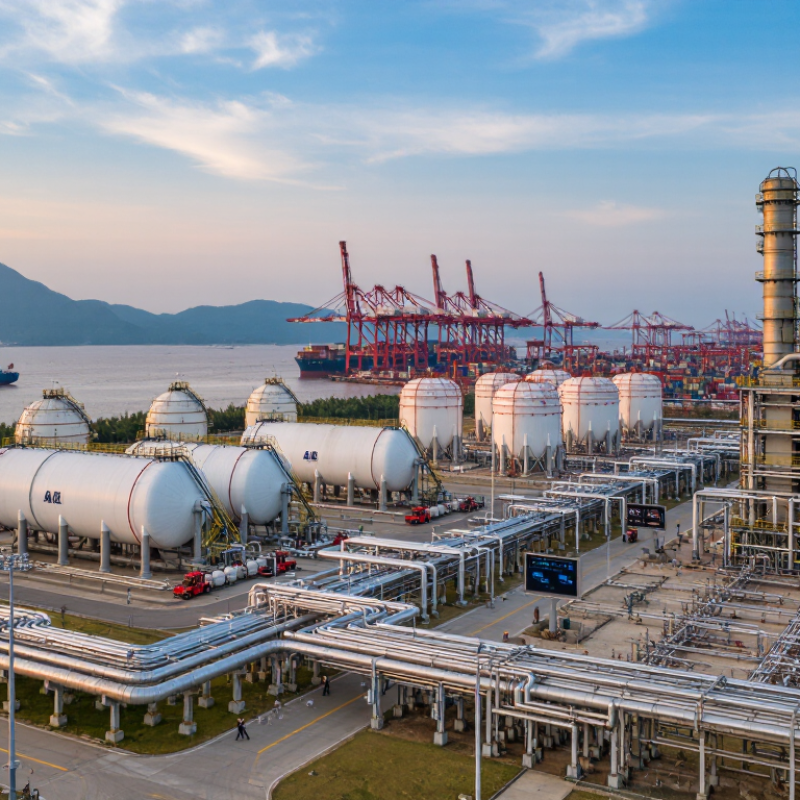
10 Best Gas Infrastructure Companies for Global Buyers

Definition and Scope of Gas Infrastructure Companies

Gas infrastructure companies design, build, own, or operate systems that move and store natural gas. Their assets may include gathering lines, processing plants, transmission pipelines, compressor stations, storage caverns, terminals, and distribution networks. The boundary is not always clean. A company may own pipelines but outsource maintenance or control room operations.

For global buyers, this category should extend beyond visible steel and concrete. It includes engineering services, metering systems, leak detection, cybersecurity, emergency response, and long-term asset management. These capabilities affect delivery reliability and operating costs. A practical assessment should examine pipeline capacity, pressure management, storage access, maintenance records, and connection timelines. It should also review safety procedures, environmental monitoring, financial resilience, and compliance with local energy rules.

Experience matters here. A project can look efficient on paper yet struggle with seasonal demand or difficult terrain. Data quality can also vary between regions. Buyers should request audited performance information, incident histories, permitting evidence, and clear service responsibilities. No single score is enough. The strongest evaluation compares technical capacity with local conditions, contract terms, and the company’s ability to respond when equipment fails. That last point is often underestimated.


Criteria for Evaluating Global Gas Infrastructure Suppliers

Global gas infrastructure suppliers should be judged beyond price, production volume, or polished presentations. A reliable evaluation begins with documented engineering experience across pipelines, storage facilities, terminals, and compression systems. Ask for verified project records, operating conditions, delivery dates, and maintenance outcomes. Details matter. A supplier should explain how its equipment performs during pressure changes, extreme temperatures, and long periods of continuous use.

Safety evidence deserves close attention. Review quality certifications, inspection procedures, emergency plans, and worker training records. Confirm that designs support applicable national and international requirements. Technical teams should provide clear drawings, testing data, material traceability, and commissioning procedures. Vague answers create expensive uncertainty. Cybersecurity also matters where digital monitoring or remote control is involved. Request practical information about access controls, software updates, backup systems, and incident response.

Commercial strength is another useful test. Examine manufacturing capacity, spare-parts availability, warranty terms, and service coverage near the project site. A low purchase price may become costly when replacement parts require months to arrive. During supplier interviews, assess communication quality and escalation procedures. Can the team explain a failure without hiding behind jargon? That reveals experience. No scorecard is perfect. My own reviews have sometimes overvalued technical specifications and undervalued local support. A balanced assessment should compare lifecycle cost, environmental performance, schedule discipline, and the supplier’s willingness to disclose limitations. Credible partners admit what they cannot provide.

Profiles of the 10 Leading Gas Infrastructure Companies

The ten leading gas infrastructure companies serve different points in the value chain. Profile one focuses on long-distance transmission, with compressor stations spaced across remote corridors. Profile two develops LNG terminals, where insulated tanks can hold millions of cubic meters of chilled gas. Profiles three and four specialize in underground storage and regasification. They help buyers manage winter peaks and sudden supply changes.

Other profiles cover offshore pipelines, metering systems, digital monitoring, modular stations, and integrated utility networks. Their commercial strength depends on more than scale. Contract flexibility, maintenance records, local permits, and emergency response matter just as much. The International Energy Agency reported that global gas demand grew in 2024, while the Global Gas Infrastructure Tracker continues to record extensive planned pipeline and LNG capacity. These figures suggest opportunity, but not guaranteed returns.

A practical buyer should compare throughput, storage days, pressure ratings, and connection timelines. Ask for recent outage data. Ask again. Public filings often show stronger reliability claims than field performance. The Gas Infrastructure Europe database also highlights how storage access differs sharply by region. Some operators offer sophisticated digital controls, yet older valves and fragmented data can still create delays. The strongest profiles therefore combine engineering depth with transparent reporting, realistic expansion schedules, and evidence from operating assets. Their weaknesses deserve equal attention.

10 Best Gas Infrastructure Companies for Global Buyers

Major LNG Buying Markets by Regasification Capacity

Operational LNG regasification capacity indicates the scale of infrastructure available to receive, process, and distribute imported natural gas. The figures below are rounded 2024 capacity estimates for major global buying markets and do not identify individual companies or brands.

Regional Strengths, Services, and Infrastructure Capabilities

The 10 Best Gas Infrastructure Companies for Global Buyers should be judged by regional reach, service quality, and physical resilience. North American operators often provide dense pipeline networks, underground storage, and flexible balancing services. European infrastructure companies tend to excel in cross-border interconnection, reverse-flow capability, and LNG access. In the Middle East and Africa, large-scale processing, export terminals, and long-distance pipelines remain key strengths. Asian providers often focus on regasification, storage, and demand reliability near major coastal markets.

The International Gas Union reported 404.4 million tonnes of global LNG trade in 2023. It also recorded around 483.3 million tonnes per annum of liquefaction capacity. These figures show why terminal access matters as much as production capacity. The IEA’s Gas 2024 report expects global gas demand to keep growing through 2025, although growth remains uneven across regions. Buyers should examine maintenance records, pressure-management systems, metering accuracy, and emergency response procedures. A low tariff can hide limited storage or weak last-mile connections. That is a common mistake.

Tips: Compare infrastructure by delivered reliability, not nameplate capacity. Ask for outage statistics, pipeline quality data, storage terms, and commissioning timelines. Verify whether services include transport, balancing, inspection, and digital monitoring. No region is flawless. Weather exposure, permitting delays, and aging equipment can change a strong proposal quickly.

How Global Buyers Can Compare and Select the Right Supplier

Global buyers should compare gas infrastructure suppliers by deliverability, not impressive project announcements. The International Energy Agency’s Gas 2024 report expects global gas demand to rise through 2025, increasing pressure on storage, pipelines, and LNG facilities. Ask each supplier for verified capacity, seasonal availability, maintenance records, and delivery performance.

Reliability needs physical evidence. Review compressor age, storage withdrawal rates, backup routes, and emergency response times. The Energy Institute’s Statistical Review of World Energy 2024 reported that natural gas remained a major part of global energy consumption in 2023. This supports long-term demand, but it does not guarantee local supply security. Request site-level data, not regional averages. Check whether proposed capacity is operating, under construction, or only planned.

Commercial terms deserve equal attention. Compare contract flexibility, price formulas, currency exposure, minimum purchase obligations, and termination rights. The International Energy Agency’s World Energy Outlook 2024 highlights continuing uncertainty across energy markets, making rigid contracts risky for smaller buyers. Suppliers should also disclose methane measurement methods, incident records, and compliance controls. Independent audits matter.

A perfect scorecard is unlikely.

Procurement teams often overvalue low prices and underestimate port congestion, spare-part delays, or weak local support. That is a practical mistake. Use reference checks with comparable buyers, inspect facilities where possible, and test the supplier’s emergency procedures before signing. Data can still be incomplete; record assumptions clearly and review them every year.

Get In Touch

Drop Us A Message

    Our Contact Details

    • IPS Group BV | Head Office (NB), Technopol 4, 5026 SB Tilburg, The Netherlands

      IPS Group BV | Rhijnspoor 239, 2901 LB Capelle a/d IJssel, The Netherlands
    • sale@qbhardware.org
    • +31 (0) 10 303 2625